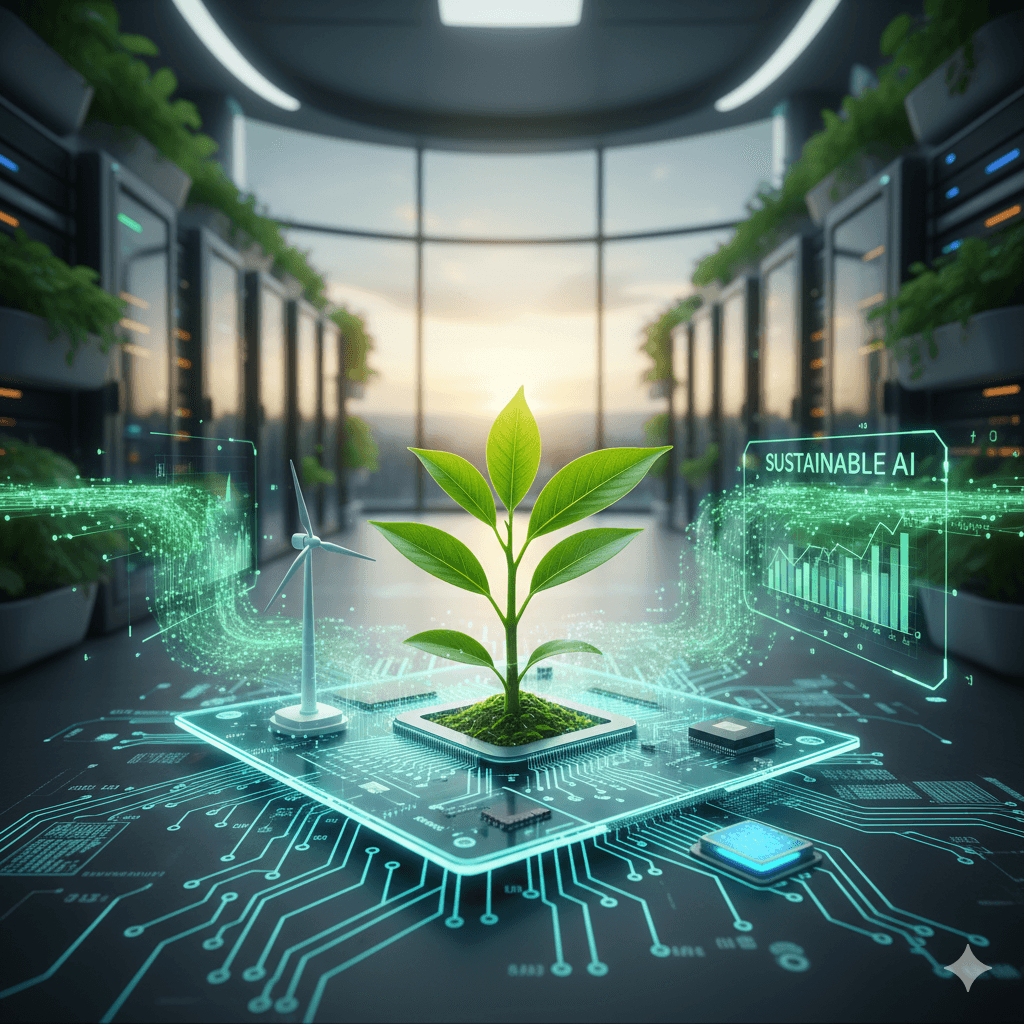
Powering Down the Cloud: The Rise of Sustainable Computing and Green AI
The digital economy runs on data centers, and these centers have a growing environmental footprint. The surging demand for compute-intensive workloads from Generative AI, robotics, and immersive environments is creating enormous demands on global infrastructure, leading to power constraints and a need for greener solutions. Sustainable technology is no longer a niche concern; it is a critical pillar for industrial redesign and future competitiveness.
Shifting to Green Computing
Green Computing focuses on minimizing the energy consumption and carbon footprint of IT operations. This trend is driving innovation across hardware, software, and energy systems:
The Role of AI in Efficiency
Paradoxically, the compute-heavy nature of AI is also its solution. AI can be used to optimize energy systems, leading to a new level of efficiency:
By integrating these technologies, businesses can tackle the dual challenge of scaling their digital capabilities while achieving their net-zero emissions targets. The future of innovation is inseparable from the future of sustainability.
Enjoyed reading this?
I love discussing WordPress, AI automation, and web development. If you have a project in mind or just want to chat, let's connect!
Want to dive deeper?
Book a Strategy Call